
We have consulted and/or pursued projects in a number of areas related to child-computer interaction and natural user interaction.
Touchscreen Interaction Design for Children
+survey
+framework
Detecting Gesture Patterns on Wearables
+smartwatches
+template matching
Teaching & Learning Computer Programming
+block-based PencilCode
+Amphibian
Children’s Whole-Body Gesture Recognition
+Microsoft Kinect
+skeleton tracking
+dataset
Whole-Body Gesture Interaction
+fitness games
Game Design can be For Science
+invasive species
+science games
TIDRC
Details
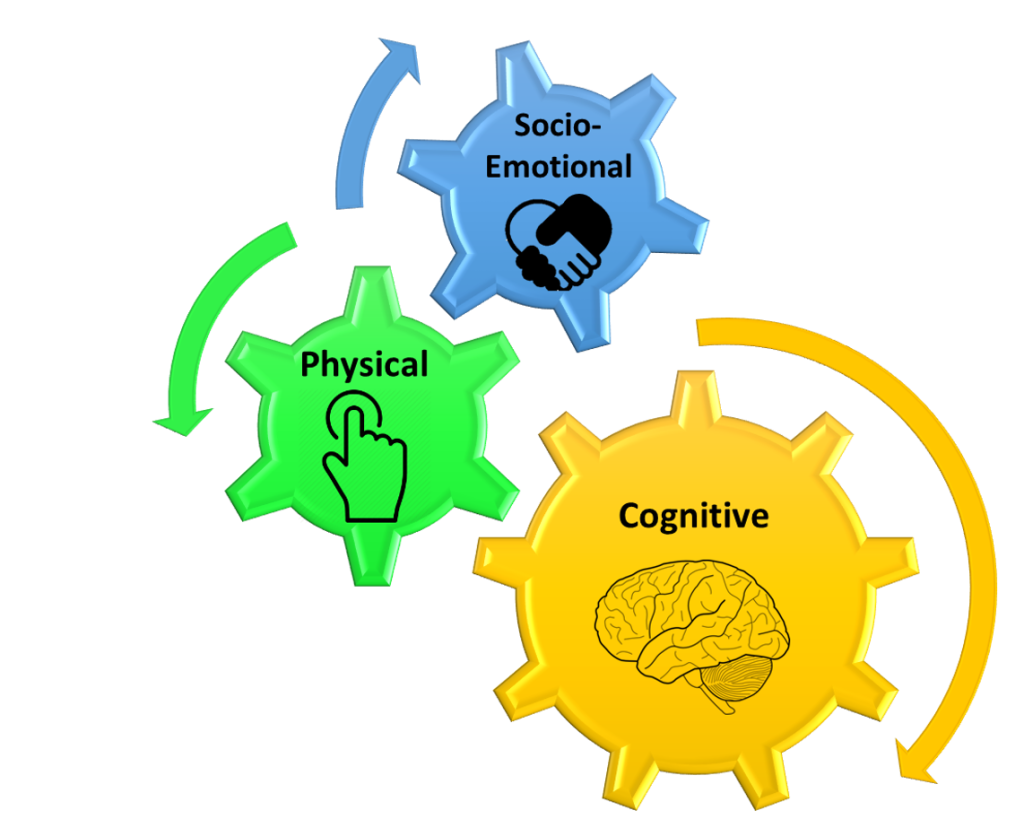
Decades of research in child-computer interaction have defined empirically grounded interface design guidelines for better meeting the cognitive, physical, and socio-emotional needs of children. Yet many apps for kids don’t follow or even contradict these recommendations. Why does this happen? We aimed to characterize the gap that exists between research and practice, specifically for touchscreen interface design for children. A meta-analysis led to the TIDRC (“tide-rock”) conceptual framework for touchscreen interaction design for children ages 2 to 11.
We also included an empirical analysis of 50 free iPad apps for children to demonstrate how the framework can be used to assess whether research-based design guidelines are being implemented in practice. The TIDRC framework guide as a one-sheet download is available to download here for researchers and interface design practitioners.
Publications
Soni, Nikita, Aloba, Aishat, Morga, Kristen S., Wisniewski, Pamela J., and Anthony, Lisa. 2019. A Framework of Touchscreen Interaction Design Recommendations for Children (TIDRC): Characterizing the Gap between Research Evidence and Design Practice. In Proceedings of the Conference on Interaction Design and Children (IDC’19), Boise, ID, USA, June 12-15, to appear. [PDF]
This work is partially supported by National Science Foundation Grant Awards #IIS-1552598. Any opinions, findings, and conclusions or recommendations expressed in this paper are those of the authors and do not necessarily reflect these agencies’ views.
Learning to Program
Bridging Languages and Learning Computing
Jeremiah Blanchard
Dr. Lisa Anthony
Dr. Christina Gardner-McCune
Details
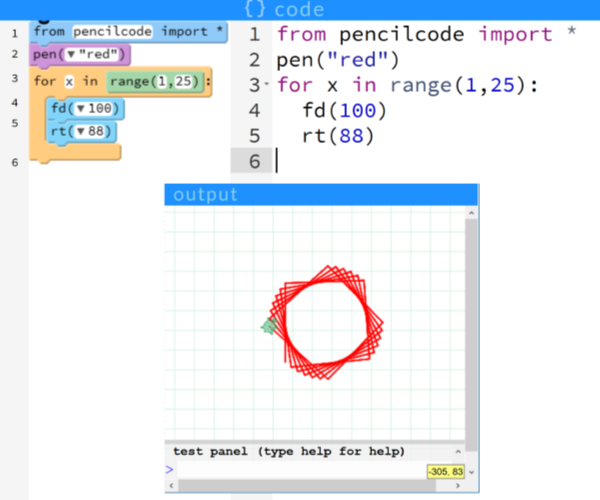
While finishing his Ph.D. degree, Jeremiah studied how students can more effectively learn programming languages, especially in introductory computing courses.
Jeremiah wrote several tools and was published at the ACM Special Interest Group on Computer Science Education (SIGCSE). Jeremiah is now an instructional faculty member at the University of Florida in the Dept of Engineering Education.
Tools:
- Pencil Code, an environment that provides blocks-based and text representations of production languages, and in which users can switch between blocks and text modes in real time.
- Amphibian
Blanchard, J.J. 2020. Building Bridges: Dual-Modality Instruction and Introductory Programming Coursework. Ph.D. thesis, Department of Computer and Information Science and Engineering, University of Florida. May 2020. [PDF]
Publications
Refereed Conference Papers
1. Blanchard, J., Gardner-McCune, C., and Anthony, L. 2019. Effects of Code Representation on Student Perceptions and Attitudes Toward Programming. Proceedings of the IEEE Symposium on Visual Languages & Human-Centric Computing (VL/HCC’2019), Memphis, TN, USA, October 14-18, 2019, Pages 127-131. [PDF]
2. J. Blanchard, C. Gardner-McCune, L. Anthony. 2016. Hybrid environments: a bridge from blocks to text. In Proceedings of the 2017 ACM Conference on International Computing Education Research (ICER2017). ACM Press, New York, NY. 295-296.
Refereed Conference Posters
3. Blanchard, J., Gardner-McCune, C., Anthony, L. 2018. How Perceptions of Programming Differ in Children with and without Prior Experience. Proceedings of the ACM Technical Symposium on Computer Science Education (SIGCSE’2018), Baltimore, Maryland, February 21 – 24, 2018, pages 1099-1099. [PDF]
Refereed Workshop Papers
4. J. Blanchard, C. Gardner-McCune, L. Anthony. 2015. Bridging Educational Programming and Production Languages. Paper for the “Every Child a Coder” workshop, ACM Conference on Interaction and Design and Children (IDC’2015), Boston, MA, 21 June 2015. [PDF]
Usable Security for Families
Smart and Trustworthy Cyberspace project
Dr. Lisa Anthony
Aishat Aloba
Aaliyah Richlen
Kim Suarez
Yu-Peng Chen
in collaboration with:
Dr. Jaime Ruiz
Sarah Morrison-Smith
Details
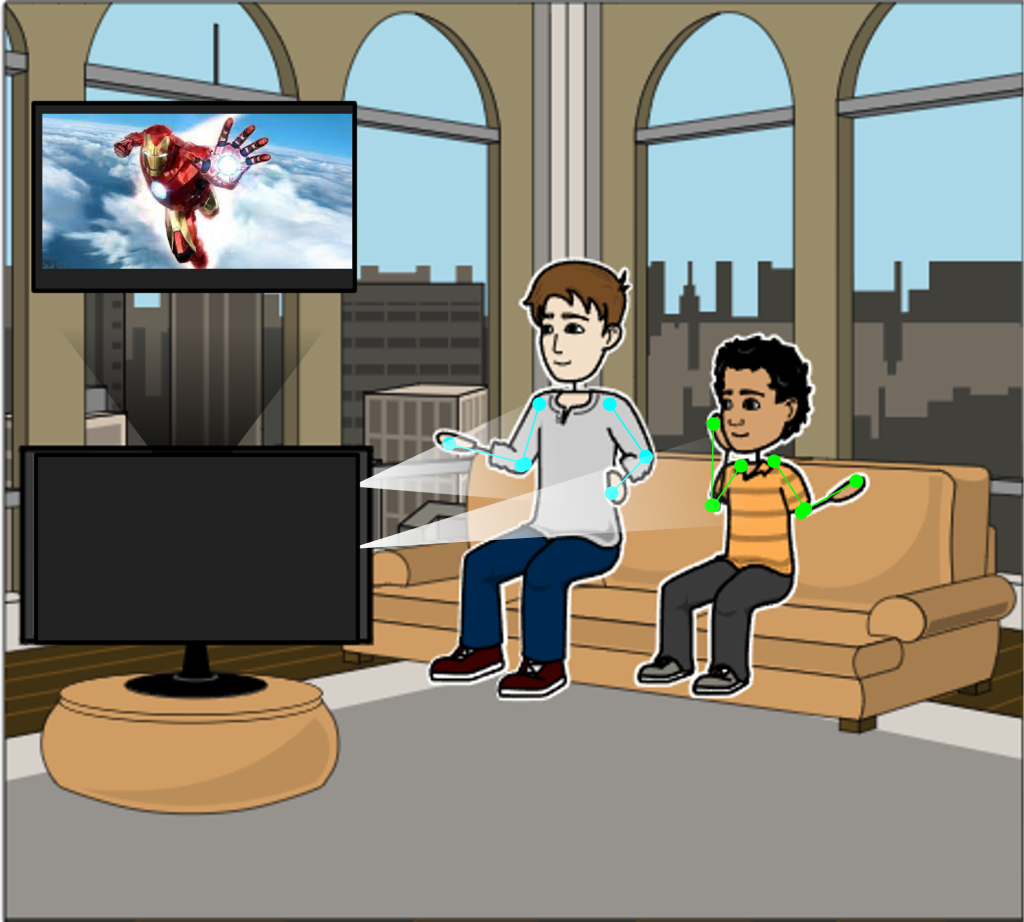
In-home privacy, security, and authentication is another example of technology that has been deployed with little thought given to children or multi-person households. And as our future environments get smarter — with dynamic sensing and multimodal input — we still don’t know how to design these experiences for multi-generational contexts.
We started by asking how multimodal interactions could be used seamlessly for identification, similar to personal biometrics like fingerprints and facial recognition.
We also explored how children might use smart home speakers and how the speakers’ speech recognition might fail on their input.
Future work could use these findings to consider diverse user groups’ perspectives and challenges when using emerging interaction technologies like gesture, speech, and motion.
Publications
1. Kim, M.K., Druga, S., Esmaeili, S., Woodward, J., Shaw, A., Jain, A., Langham, J., Hollingshead, K., Lovato, S.B., Beneteau, E., Ruiz, J., Anthony, L., and Hiniker, A. 2022. Examining Voice Assistants in the Context of Children’s Speech. International Journal of Child-Computer Interaction. Volume 34, December 2022, Article no.100540, 13 pp. [PDF].
2. Morrison-Smith, S., Aloba, A., Lu, H., Benda, B., Esmaeili, S., Flores, G., Smith, J., Soni, N., Wang, I., Joy, R., Woodard, D.L., Ruiz, J., and Anthony, L. 2020. MMGatorAuth: A Novel Multimodal Dataset for Authentication Interactions in Gesture and Voice. Proceedings of the 2020 International Conference on Multimodal Interaction (ICMI ’20), October 25–29, 2020, Virtual event, Netherlands. ACM, New York, NY, USA, 8 pages, to appear. [PDF]
This work is partially supported by National Science Foundation Grant Awards #IIS-XXXXXXX and Discover, Inc. Any opinions, findings, and conclusions or recommendations expressed in this paper are those of the authors and do not necessarily reflect these agencies’ views.
KidsPose
Whole-Body Interaction for Children
Dr. Lisa Anthony
Aishat Aloba
Alex Shaw
Julia Woodward
Amanda Castonguay
in collaboration with:
Dr. Eakta Jain
Yuzhu Dong
Isabella Cuba
Details
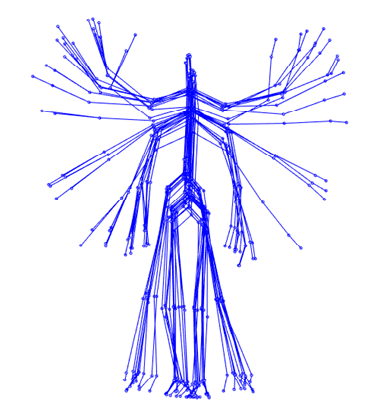
This project established and characterized clearly that children and adults make body movements differently enough to confuse whole-body interaction systems such as the Microsoft Kinect. We investigated the intersection of understanding what the differences are, and how the differences actually impacted interaction. We collected the first dataset of child and adult motions published and made available as KinderGator.
We ran the first explicit study of the perception of child motion compared to analogous adult motion, finding that people can generally tell if a motion (masked for physical signals) is being performed by a child or an adult, and even more so for dynamic motions such as walking and running
What cues helped people tell? We analyzed walking and running motions for temporal (dependent on time) and spatial (dependent on distance) features from literature on studying gait (how people walk). Our findings showed that children differ from adults only in terms of temporal features: children generally complete walking and running motions in less time and with higher energy compared to adults.
Future work could use these findings to design better recognition algorithms better attuned to children’s motion, and to use them in the design of whole-body interaction games like our prototype FunFitTech.
Read more at the full project website!
Publications
Journal Articles
1. Jain, E., Anthony, L., Aloba, A., Castonguay, A., Cuba, I., Shaw, A., and Woodward, J. 2016. Is the motion of a child perceivably different from the motion of an adult? ACM Transactions on Applied Perception, Volume 13, Issue 4, Article 22, July 2016. [PDF]
Refereed Conference Papers
2. Aloba, A., Luc, A., Woodward,J., Dong, Y., Zhang, R., Jain, E., and Anthony, L. 2019. Quantifying Differences between Child and Adult Motion Based on Gait Features. In International Conference on Human-Computer Interaction , Orlando, FL, USA, July 29-31, Pages 385-402. Springer, Cham. [PDF]
3. Aloba, A., Flores, G., Woodward, J., Shaw, A., Castonguay, A., Cuba, I., Dong, Y., Jain, E.and Anthony, L. 2018. Kinder-Gator: The UF Kinect Database of Child and Adult Motion. EUROGRAPHICS Proceedings, Delft, Netherlands, April 16-20, 2018, 4 pages. [PDF]
4. Dong, Y., Paryani, S., Rana, N., Aloba, A., Anthony, L., Jain, E. 2017. Adult2Child: dynamic scaling laws to create child-like motion. MIG’17 , November 8–10, 2017, Barcelona, Spain, pages 1-10. [PDF]
This work is partially supported by National Science Foundation Grant Awards #IIS-1552598. Any opinions, findings, and conclusions or recommendations expressed in this paper are those of the authors and do not necessarily reflect these agencies’ views.
FunFitTech
Whole-Body Fitness Games for Children and Adults
Dr. Lisa Anthony
Aishat Aloba
Gianne Flores
Ian Mayne
Jaida Langham
Zari McFadden
Nikita Dagar
Samyukta Ganesan
Sydney Richardson
Details
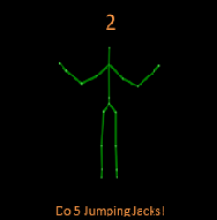
If we can recognize children (and adults’) whole body movements — like walking, jumping, lunging, and clapping — then we can design interactive experiences that this new technology enables. We spent some time designing exergames first for older adults, and then for children, that can sustain their motivation to exercise in the long-term. The games and the recognition algorithms could not be designed the same way.
Through early design interviews, focus groups, and contextual observation with local kids and physical education (PE) teachers, we considered how we can design exergames that might appeal to children for a long period and maintain physical activity efficacy. Our findings showed ways the same user need may be contextualized very differently depending on the design lens. For example, providing feedback may be required, but from the child’s perspective — a “fun” lens — this idea points to visual design and rewards. From the teacher’s perspective, the lens may be focused more on proper form and expert guidance.
Future work could use our findings to inform further design probes into the space of exercise games for children. We recommend always including multiple stakeholders, not only children and teachers, but also parents, sport coaches, and in the design process.
This project’s seed was a similar project Dr. Anthony and Samyukta Ganesan at UMBC investigated ways to design and develop exergames for older adults by taking into account their attitudes towards exercise, staying active, technology, and games. The complete original UMBC work can be found here.
Publications
1. Aloba, A., Flores, G., Langham, J., McFadden, Z., Bell, J., Dagar, N., Esmaeili, S., and Anthony, L. 2020. Toward Exploratory Design with Stakeholders for Understanding Exergame Design. In Extended Abstracts of the Conference on Human Factors in Computing Systems (CHI EA ‘2020). Honolulu, Hawaiʻi, USA, April 25-20, Pages 1–8. [PDF]
2. Ganesan, S. and Anthony, L. 2012. Using the Kinect to Encourage Older Adults to Exercise: A Prototype. Extended Abstracts of the ACM Conference on Human Factors in Computing Systems (CHI’2012), Austin, TX, 5 May 2012, p.2297-2302. [Pdf] [Poster]
Summer 2015 FunFitTech Project Demo
INIT Kinect Games for Exercise Demo
You can find more videos on the project here.
This work is partially supported by National Science Foundation Grant Awards #IIS-1552598. Any opinions, findings, and conclusions or recommendations expressed in this paper are those of the authors and do not necessarily reflect these agencies’ views.
Lakeville Protectors
Game Design For Science
Dr. Lisa Anthony
Aishat Aloba
Gabriel Coleman
Triton Ong
Shan Yan
in collaboration with:
Dehlia Albrecht
Marko Suvajdzic

Details
Invasive species are non-native species that cause ecological, environmental harm to the environment and/or harm to people. To teach children about invasive species and the effect of these species on the environment, the University of Florida Center for Aquatic and Invasive Plants (UF IFAS) developed a board game called Lakeville. Deployed in multiple Florida science classrooms, evaluations showed the game helped kids improve their knowledge of invasive species. To investigate how to develop a version of Lakeville accessible to children outside the classroom, we prototyped and tested a mobile strategy game version called Lakeville Protectors. This project was in collaboration with UF Digital Worlds Institute and the UF IFAS.
Publications
Aloba, A., Coleman, G., Ong, T., Yan, S., Suvajdzic, M., Albrecht, D., Anthony, L. 2017. From Board Game to Digital Game: Designing a Mobile Game for Children to Learn About Invasive Species. CHI PLAY’17 Extended Abstracts, October 15–18, 2017, Amsterdam, Netherlands, pages 375-382. [PDF]
[Ancient] News and Updates
- Two INIT Lab undergraduates complete successful senior theses! #latertweet
- IDC 2019 Paper Accepted!
- Kids Application Survey Project
- Apps for Kids Project
- SIGCSE2021 paper accepted!
- INIT Lab PhD student Jeremiah Blanchard defends his dissertation!
- Upcoming paper to appear at SIGCSE’2020!
- Blanchard paper receives Honorable Mention at VL/HCC 2019!
- Paper to appear at VL/HCC 2019!
- Bridging Languages paper accepted to ICER Doctoral Consortium
- Bridging Languages Project: Middle school study
- Bridging Languages Project: Progress and new initiatives
- Bridging Languages Project: Summer camp study
- INIT Lab collaboration on smart, wearables-based COVID-19 mitigation techniques leads to journal article in Sensors! #laterpub #latertweet
- New NSF-funded project on smart authentication for all ages, with USF!
- New dataset to appear at ICMI2020 and download coming soon…
- How to Calculate Interrater Reliability using Fleiss’ Kappa
- How to Calculate Interrater Reliability using Cohen’s Kappa
- Why Undergraduate Research has been Beneficial to me
- INIT Lab co-authored paper appears at IEEE S&P 2019!
- POSE Project: Paper characterizing children’s natural motion qualities accepted to ICMI 2021
- INIT Lab PhD student Aishat Aloba defends dissertation!
- POSE Project: Paper presenting a tool to enable the examination of how users articulate whole-body gestures accepted to ICMI 2020
- Creating the KiMoViz Toolkit for Visualizing Motions in the Kinder-Gator Dataset
- Aishat gets accepted to ICMI 2019 Doctoral Consortium!
- POSE Project: Analysis of child and adult motion using gait features accepted to HCII 2019
- Pose Project: Choosing a representative subset of motions for whole-body recognition
- Pose Project: Dataset paper accepted to Eurographics 2018
- Pose project: poster paper to appear at Eurographics 2018 conference!
- Pose Project: Next steps…
- FunFitTech Paper accepted to CHI2020 LBW!
- FunFitTech Project: Brainstorming themes and design ideas
- FunFitTech Project: More affinity diagramming
- FunFitTech Project: Affinity diagramming
- FunFitTech Project: Status update
- FunFitTech Project: Game elements
- FunFitTech Project: Current state of Kinect games